
How To Build the Perfect Main Course Salad
Recipe Key
During the warmer months my favorite lunch is a hearty main course salad. Packed with colorful vegetables, protein, and healthy carbohydrates, it keeps me nourished and satisfied for hours. I’m sharing my favorite recipe below but I rarely make it the same way twice. Instead of just a recipe, this post gives you a simple formula for creating a delicious main course salad with the ingredients you love and have on hand.
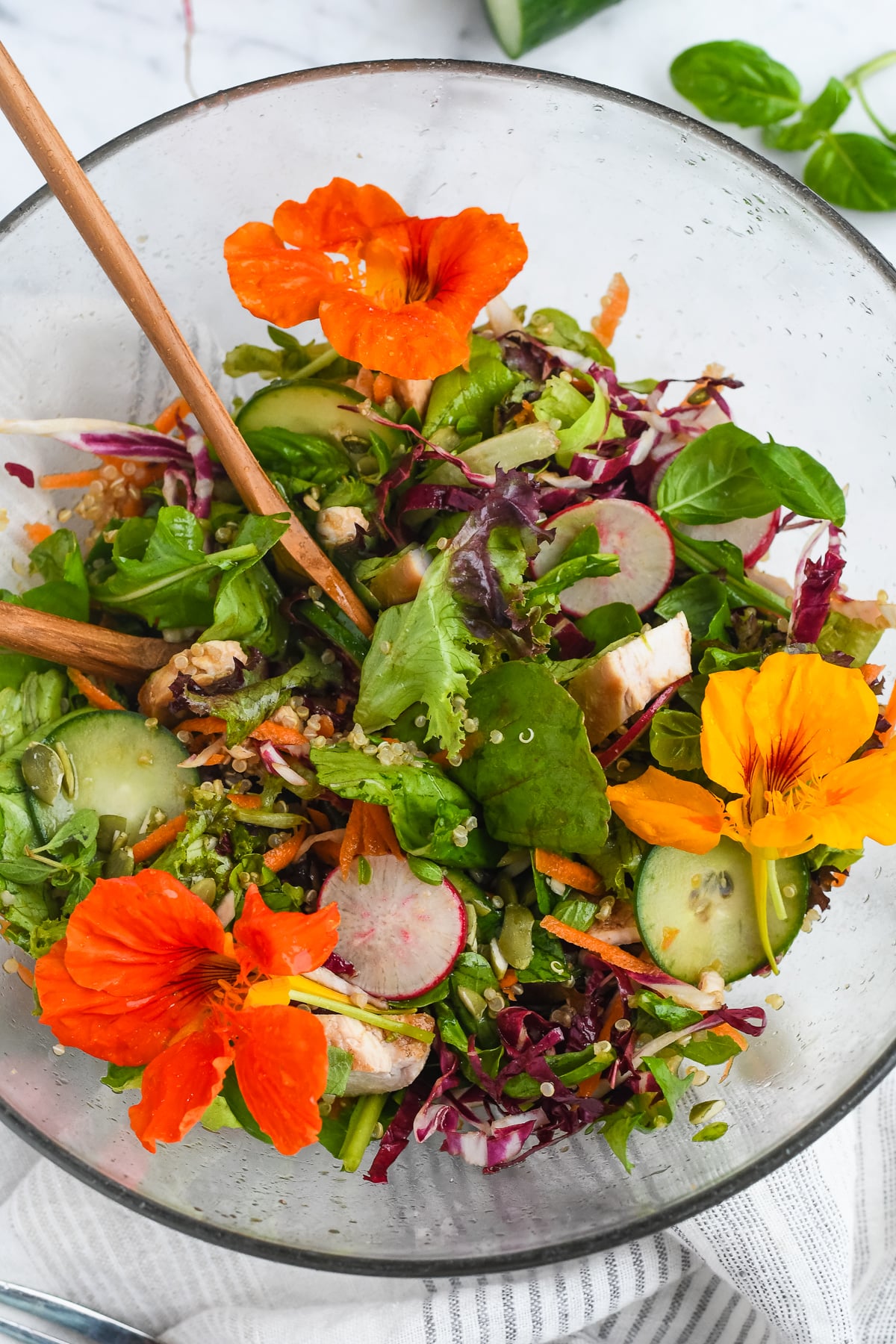
What Makes a Main Course Salad?
Unlike a side salad, a main course salad is designed to be a complete meal. By combining fresh greens with protein, healthy carbohydrates, colorful vegetables, and a simple homemade dressing, you create a meal that’s both nourishing and satisfying. The best part is that you can mix and match ingredients to fit the season, your tastes, or whatever you have in your refrigerator.
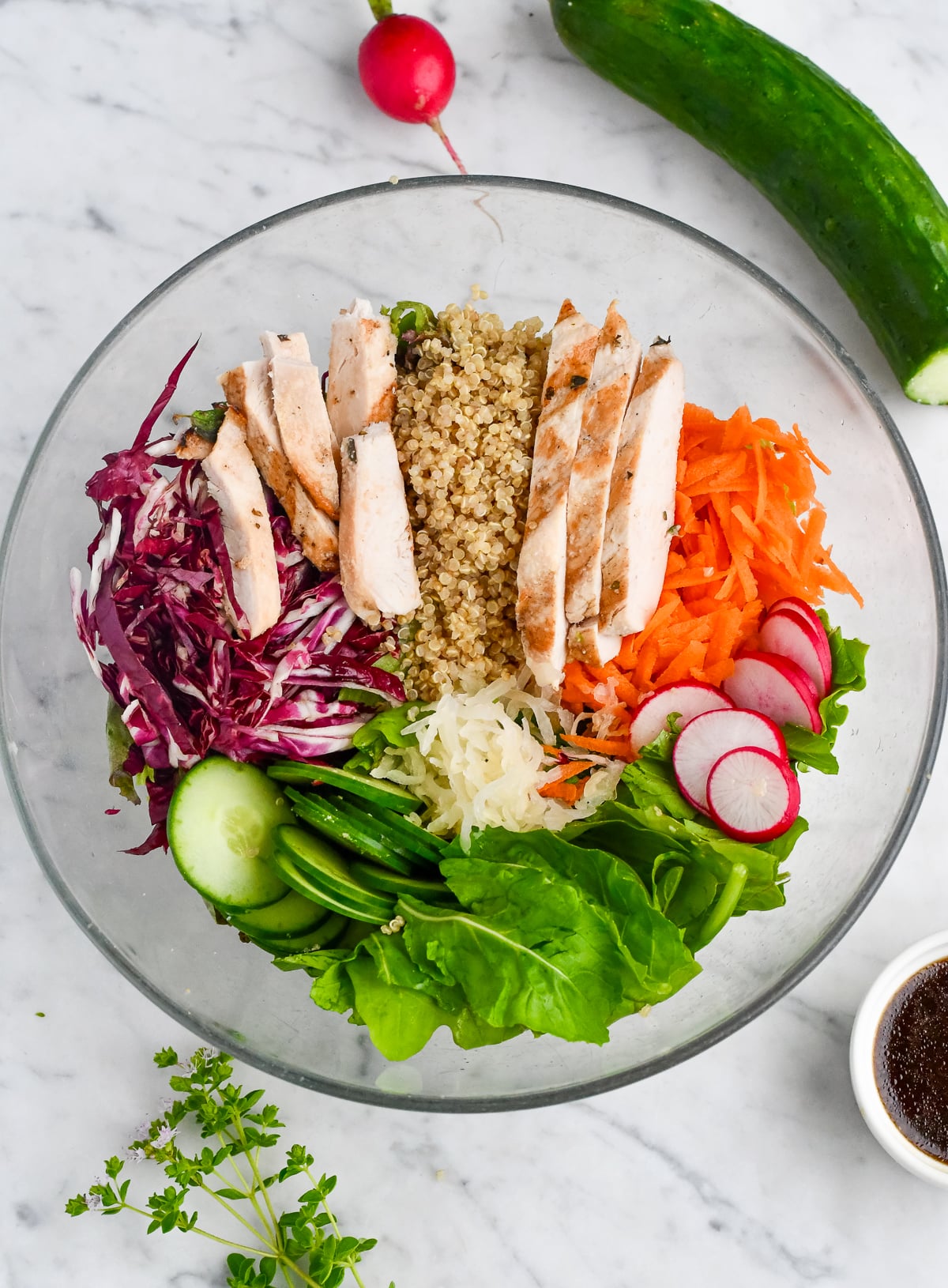
Build Your Main Course Salad in 7 Simple Steps
🥬 Start with Greens
🌈 Add Colorful Vegetables
🌾 Choose a Healthy Carb
💪 Add Protein
🥑 Add Healthy Fats
🌿 Finish with Fresh Herbs & Crunch
🫒 Toss with a Simple Balsamic Vinaigrette
Step 1: Start with Fresh Greens
Greens are the foundation of a great main course salad. I like combining two or three different varieties because each one brings its own flavor and texture. Mixing tender, crisp, peppery, and slightly bitter greens creates a salad that’s much more interesting than using just one type.
Tender and Crisp Greens – This is the bulk of the salad.
- Baby butter lettuce
- Spring mix
- Baby spinach
- Mixed baby greens
- Romaine
- Green or red leaf lettuce
Bold Greens – These flavorful greens add character and depth to your salad. A little goes a long way, balancing sweeter vegetables and creating a more interesting bite.
- Arugula
- Radicchio
My Tip: I almost always combine tender lettuce with arugula, and radicchio. The mix is sweet, peppery, and just slightly bitter—one of my favorite combinations.
Step 2: Add Colorful Vegetables
Colorful vegetables add crunch, freshness, and a variety of nutrients that make your salad both beautiful and satisfying. I usually choose two to four vegetables, depending on what’s in season and what I have in the refrigerator.
Crunchy, Sweet & Juicy Vegetables – These add crisp texture, bright colors and fresh flavor.
- Cucumbers
- Radishes
- Carrots
- Tomatoes
- Red peppers
- Yellow peppers
- Red cabbage
Bold Flavor Vegetables – A little goes a long way.
- Red onion
- Scallions
Cooked Vegetables – Roasted or lightly cooked vegetables make a salad heartier and are a great way to use leftovers.
- Broccoli
- Cauliflower
- Green beans
My Tip: I almost always include carrots for sweetness and crunch, then add whatever vegetables are in season or leftover from dinner the night before.
Step 3: Choose a Healthy Carb
Healthy carbohydrates turn a salad into a satisfying meal by providing lasting energy and keeping you full longer. I usually choose just one.
Whole Grains
- Quinoa
- Millet
Roasted Vegetables
- Roasted sweet potatoes
- Butternut squash
Beans – These are unique because they provide both complex carbohydrates and plant-based protein.
- Chickpeas
- White beans
- Black beans
- Cannellini beans
My Tip: I cook a pot of quinoa at the beginning of the week so it’s ready when I make my salad.
Step 4: Add Protein
Protein is what transforms a salad into a true main course. It helps keep you satisfied for hours and provides the building blocks your body needs to repair and stay strong. My goal is 25-30 grams for each meal.
Seafood
- Left over roasted or grilled salmon or canned salmon
- Canned sardines
Poultry
- Leftover chicken or turkey
- Grilled chicken
Plant-Based Protein
- Tofu
- Sautéed Tempeh
- Lentils
- Edamame
- Beans
Cheese
- Goat cheese
- Feta cheese
My Tip: If I don’t have anything left over from last nights dinner, I’ll add canned salmon or sardines because it’s quick, delicious, and an easy way to get omega-3 fats without any cooking.
Step 5: Add Healthy Fats
Healthy fats add richness, help you absorb the fat-soluble vitamins in your vegetables, and make your salad even more satisfying.
- Avocado
- Olives
- A drizzle of tahini
- Nuts
- (Your olive oil vinaigrette also contributes healthy fat.)
Step 6: Add Fresh Herbs & Crunch
This is where an ordinary salad becomes something special. Fresh herbs brighten the flavors while nuts and seeds add texture and healthy fats.
Fresh Herbs
- Basil
- Cilantro
- Parsley
- Mint
- Oregano
- Thyme
Nuts & Seeds
- Pumpkin seeds
- Walnuts
- Pistachios
Fermented Food – adds live probiotics that help your body digest food easily.
- Sauerkraut
- Kimchi
- Pickled vegetables
My Tip: Don’t think of herbs as just a garnish. A generous handful of one or two fresh herbs adds incredible flavor and makes your salad taste fresh and vibrant.
Step 6: Finish with a Simple Homemade Vinaigrette
A good dressing ties everything together. I’m including a homemade balsamic vinaigrette that takes only a few minutes to make. It’s easy and lets the flavors of the vegetables shine.
Easy 3-Ingredient Balsamic Vinaigrette
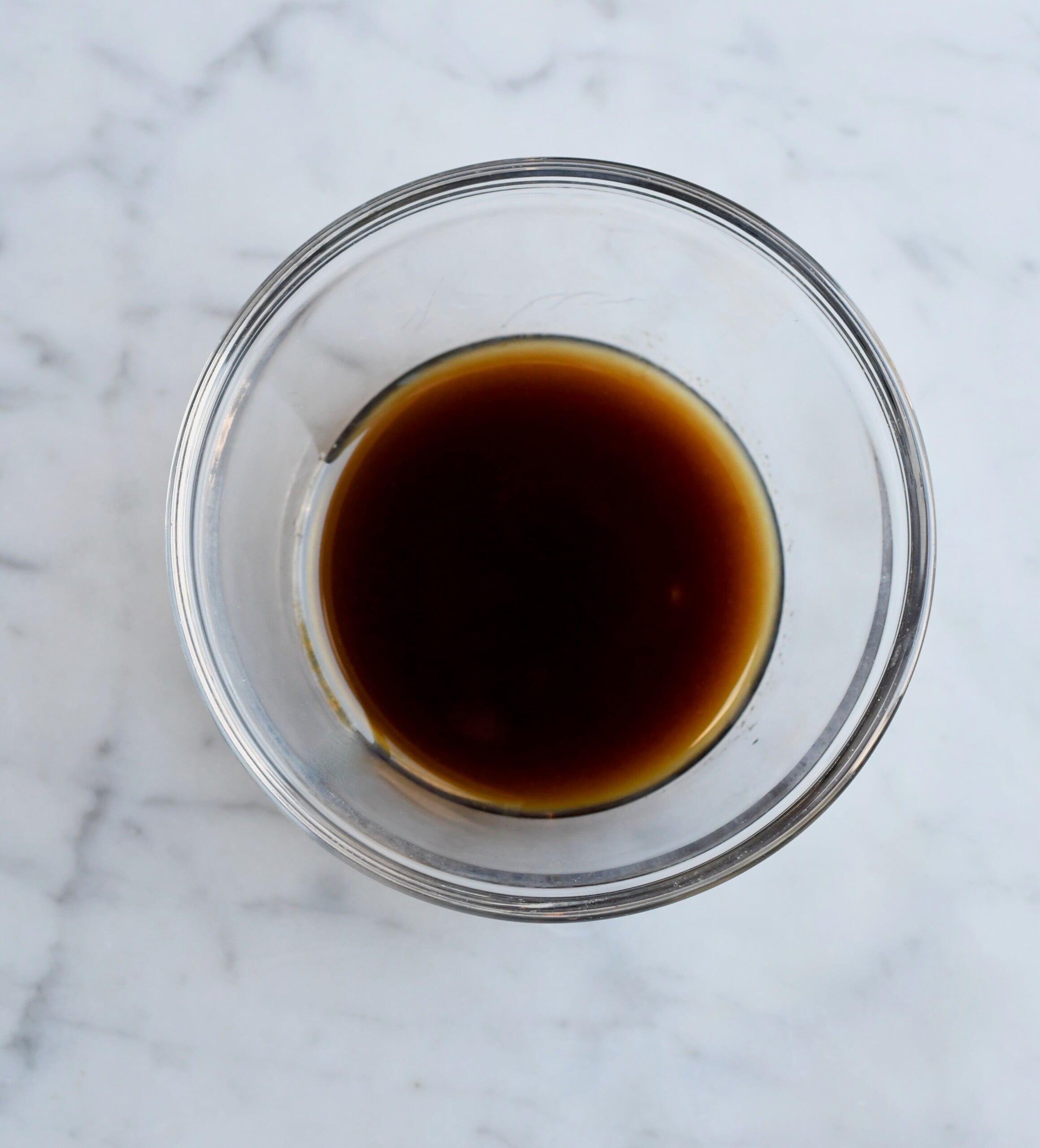
This is a simple balsamic vinaigrette. I learned how to make it many years ago when I was in Portofino, Italy. The waiter made this dressing at the table and tossed it with the salad. I’ve been using it ever since. I make it fresh each day since it only takes a few minutes.
- Balsamic vinegar
- Sea salt
- Olive oil
Pour vinegar into a small bowl. Add salt, mix to dissolve. Gently whisk in the olive oil with a fork. Drizzle over the salad and toss.
My Favorite Main Course Salad
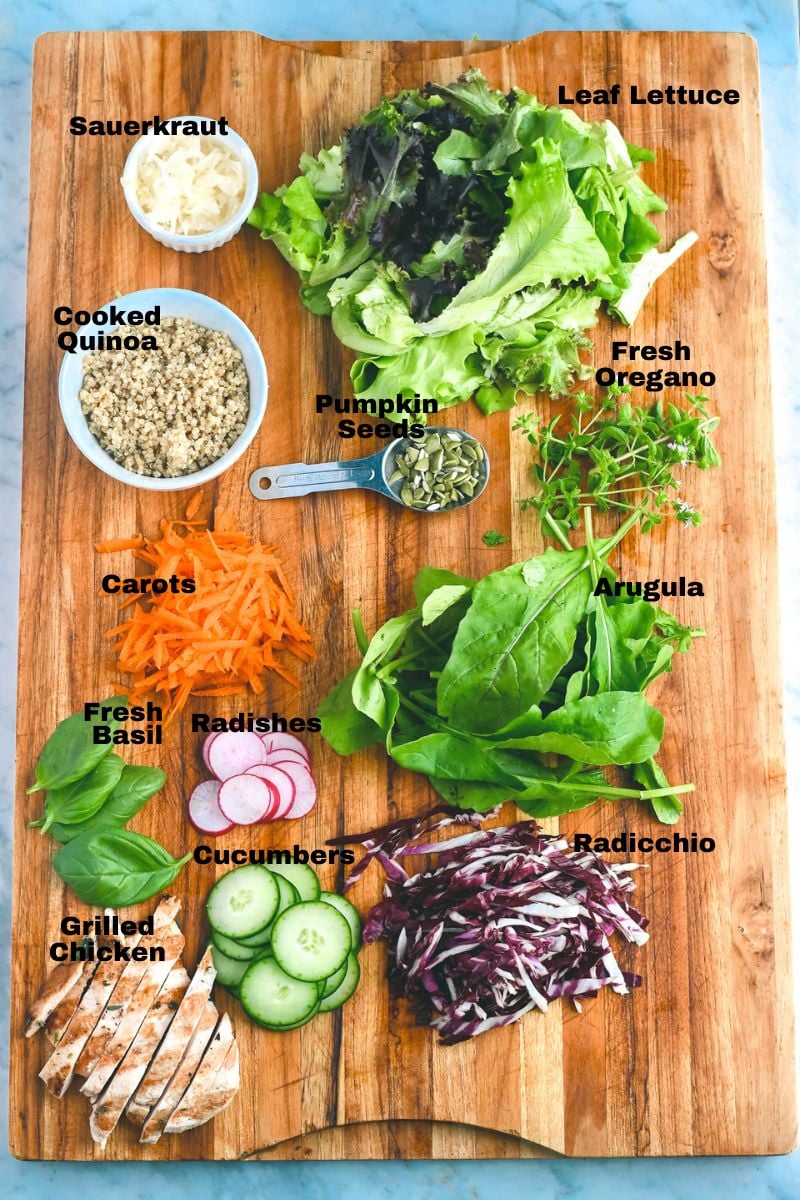
While there are endless ways to build a delicious main course salad, this is the combination I make regularly. It has the perfect balance of tender greens, colorful vegetables, protein, and healthy carbohydrates, and it keeps me satisfied all afternoon.
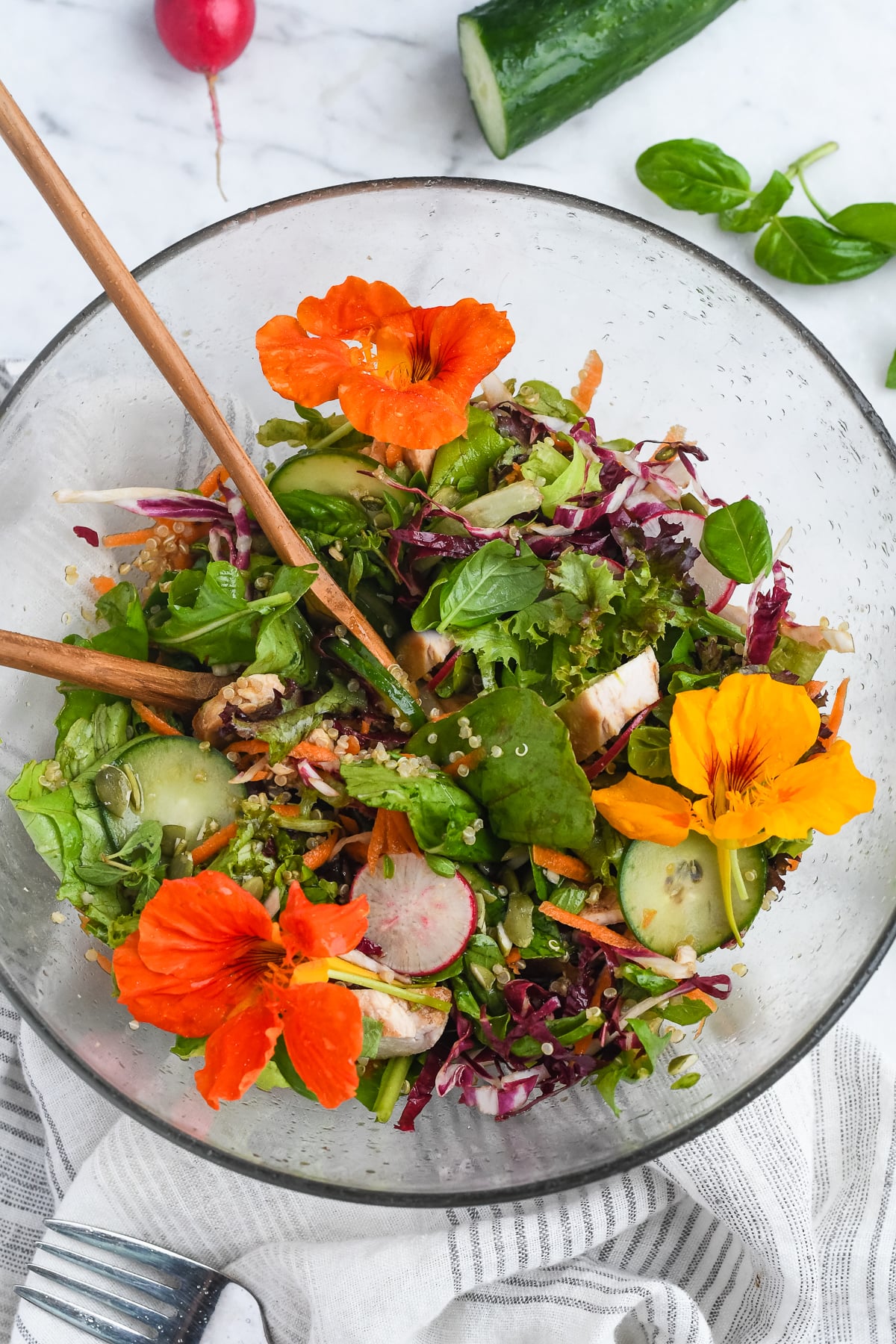
Ingredients
- salad greens
- arugula
- radicchio
- cucumbers, sliced
- radishes, sliced
- carrots, shredded
- sauerkraut
- cooked chicken
- cooked quinoa
- pumpkin seeds
- fresh herbs – oregano, basil
How to Make
- Add the greens, arugula, radicchio to a large salad bowl.
- Add the cucumbers, radishes, carrots, sauerkraut, chicken and quinoa.
- Drizzle with the balsamic vinaigrette and gently toss to combine.
- Top with pumpkin seeds and fresh herbs
- Serve immediately.
Prep Ahead for Easy Lunches
A little prep at the beginning of the week makes it easy to enjoy a fresh, nourishing main course salad every day.
- Wash and dry your greens. Store them in the refrigerator with a paper towel to help keep them crisp. Alternately buy pre-washed greens.
- Chop the vegetables. Carrots, cucumbers, peppers, cabbage, and radishes can all be cut ahead and stored in airtight containers.
- Cook your grains. Prepare a batch of quinoa or roast sweet potatoes to use throughout the week.
- Cook your protein. Throughout the week, at dinner, cook extra chicken, salmon or tofu. Otherwise keep canned salmon, sardines, beans, or tofu on hand for quick lunches.
- Mix the vinaigrette. Make a larger batch of the balsamic vinaigrette and store it in a jar in the refrigerator for up to a week. I usually make it daily but you can prep in advance.
- Assemble just before serving. Keep the dressing separate until you’re ready to eat so your salad stays fresh and crisp.
Tips for The Freshest Salads
For the freshest salad, store the ingredients separately and assemble just before serving. This keeps the greens crisp, the vegetables crunchy, and the flavors at their best.
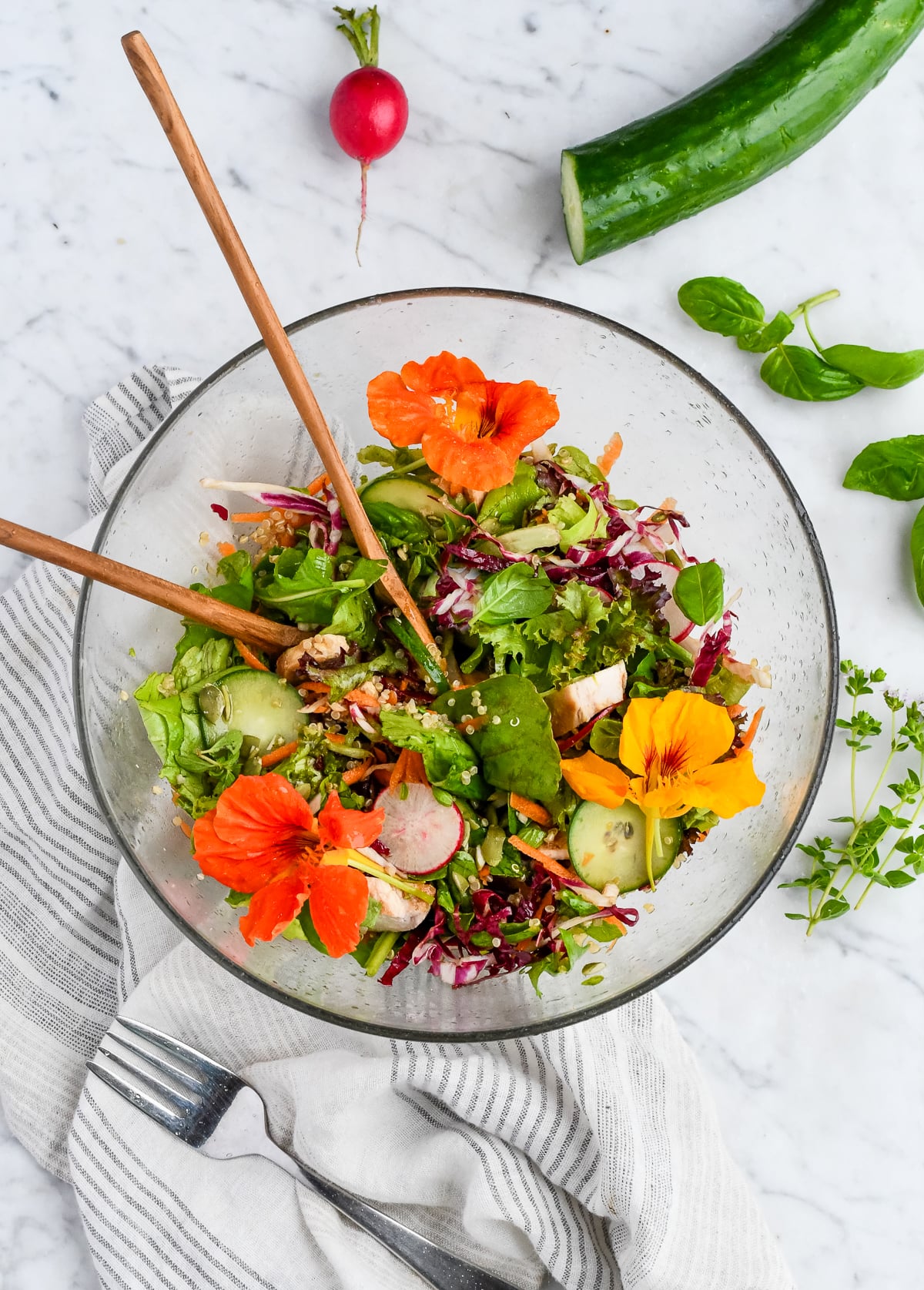
My Favorite Main Course Salad
This is the main course salad I make most often for lunch. It’s fresh, colorful, and filled with protein, healthy carbohydrates, and plenty of vegetables to keep me energized and satisfied all afternoon. Use the recipe as written or customize it with your favorite ingredients.
- Prep Time: 15 minutes
- Total Time: 15 minutes
- Yield: 1 serving 1x
- Category: Salad
- Diet: Dairy-Free, Gluten-Free, Paleo
Ingredients
- 3 cups salad greens
- 2 cups arugula
- 1/2 cup radicchio, sliced
- 1/3 cup cucumbers, sliced
- 1–2 small radishes. sliced
- 1 cup carrots, shredded
- 2 Tablespoons sauerkraut
- 3 ounces cooked chicken, sliced or shredded
- 1/4 cup cooked quinoa
- 1 Tablespoon pumpkin seeds, chopped or whole
- Fresh herbs, oregano, basil
Balsamic Vinaigrette
- 1 1/2 Tablespoons balsamic vinegar
- 1/4 teaspoon sea salt
- 2 Tablespoons olive oil
Instructions
-
- Add the greens, arugula, radicchio to a large salad bowl.
- Add the cucumbers, radishes, carrots, sauerkraut, chicken and quinoa.
- Make the balsamic vinaigrette: Pour vinegar into a small bowl. Add salt, mix to dissolve. Gently whisk in the olive oil with a fork.
- Drizzle over the salad and gently toss to combine.
- Top with pumpkin seeds and fresh herbs
- Serve immediately.
Equipment
 Buy Now →
Love the salad with salmon.
Thanks Roger, fresh salmon is great and canned salmon is easy.